
Showing posts with label memoir. Show all posts
Showing posts with label memoir. Show all posts
Monday, November 18, 2019
In the loving hospitality of my grandmother
From
Monroe, IA

Thursday, January 8, 2015
In honor of Mom
From
Toledo, IA
 |
| Me and Mom, 1985 Maytag Park in Newton, Iowa |
Well, a few days ago my mom reached a significant age milestone. I won't say which milestone, but I'm 35 so that should limit your guesses. It wasn't a particularly enjoyable birthday, as her and my father are both very sick. (Get well soon you two!) And I'm a horrible gift giver but a passable writer, so this post is about adding nuance to my previous musings about family influences and honoring my mother on her birthday. So here's to you, mom...
Thursday, January 2, 2014
The gentle virtues of Grandpa Bud
From
Toledo, IA
 |
| Grandpa Bud (center), his son (left), and my family at the WWII memorial in Washington, D.C., April 2012 |
Bud was a farmer and a truck driver. He was also a WWII veteran and proud of his service, which inspired a number of men in subsequent generations to serve in the military. He's pictured here at the right on an "Honor Flight," a program that transports WWII veterans from all over the country to the memorial on the National Mall in D.C. We were living in Virginia at the time and so were privileged to be there with him and his son, Sam, my wife's uncle. In light of all this, he could be rightly characterized as a "man's man."
So while courage and honor were two of his noble virtues, in my eulogistic reflections I wanted to also lift out what I took to be Grandpa Bud's "gentler" virtues that were crucial to his being a good man, as he indeed was. My intent for doing so was theologically rooted in the fact that virtues which might commonly be called "gentle" are precisely those that Jesus taught and exhibited himself, and the New Testament writers commend to those who would follow Christ. In naming and celebrating them in Grandpa Bud, I also encouraged those who knew him to embody these in their/our own lives. So they are...
Monday, September 23, 2013
The once and future pastor(s)
From
Toledo, IA
 |
| [Insert here the appropriate Anabaptist theological commentary about kingship, swords, etc...] |
So that's just my hangups about being characterized as a "minister" in some formal sense. The term "pastor" is even more touchy for me...
Let me first say that pastors have long been my favorite kind of people. Even after seminary and being approved for ordination, I continue to be very reluctant to think of/call myself a "pastor," mostly out of a sense of deep respect for those pastors who have played significant and various roles in shaping me as a person, generally, and as a minister in particular.
Put simply: I don't think I'm a "pastor" in the amazing ways that pastors have pastored me.
But the other week I conducted my first funeral service as a formal minister in our local community. The departed was a man who married into my wife's side of the family, and they wanted someone close to preside over the graveside service. So I happily and without hesitation said "yes" to that. For preparation of the obituary for the local paper, I emphasized to the family that when it came to ministerial titles, I preferred "Pastor" rather than "Reverend." (Oh, don't even get me started on Reverend!!)
So I guess I'm a pastor now. It's in print. And a sweet child in our local congregation called me "Pastor Brian" yesterday, so her word carries weight for me as well...
Monday, July 9, 2012
Headline: "Alum collapses after four years of grad school"
 |
| The relieved family; photo by Lindsey Kolb/EMU |
Wednesday, April 4, 2012
Micro-saga: On becoming a peacebuilder
In March 2008, Howard Zehr entered my comfortable life as an IT professional climbing the corporate ladder in central Iowa...and he promptly pulled me off. This encounter with Howard led me and my family to EMU, the CJP and seminary, and the dual degree program between the two. To say that I’ve been challenged and changed is a vast understatement, and CJP has had a big say in that process. The notion of “lenses,” for example, has become deeply embedded in my approach to the world. So thanks, Howard et al, for ruining my life in all the right ways!
[The preceding 100 words were written for my "blurb" in the forthcoming (25 more days!) graduation program for the Center Justice and Peacebuilding here at EMU. Sometimes narrating a significant experience in a ridiculously small amount of space is a very good discipline. I provide it here for posterity.]
[The preceding 100 words were written for my "blurb" in the forthcoming (25 more days!) graduation program for the Center Justice and Peacebuilding here at EMU. Sometimes narrating a significant experience in a ridiculously small amount of space is a very good discipline. I provide it here for posterity.]
Sunday, November 20, 2011
The Honnold Forum: A requiem

In my prior professional life as a web developer, the Forum was "my baby." I designed and coded the software as well as serving as the community moderator. After a few years I gained the nickname, "Lord Forum." (I always thought of it as a play on Darth Vader; as in, "Yes, Lord Vader.") The website essentially came to represent and house most forms of my creative expression: software development, songwriting, and creative writing. Not to mention the fine art of B.S. and wasting time at work, which is how the site functioned for most of its office-dweller patrons, including me.
But beginning in late 2008, my first semester of grad school at EMU, the Forum began to creep toward its demise. That the process took a full two years to complete shows how hard it was for me to finally pull the plug around this time last year. A few weeks before the end, I posted a long message announcing the site's closure along with some commentary on why I thought it had come about. That message is no longer on the website but sat on my hard drive for months. For posterity, I'm editing it only slightly and posting it here on Restorative Theology. So read on to hear my requiem for the Honnold Forum...
Sunday, September 11, 2011
"World's coming to an end, Newman..."
From
Harrisonburg, VA
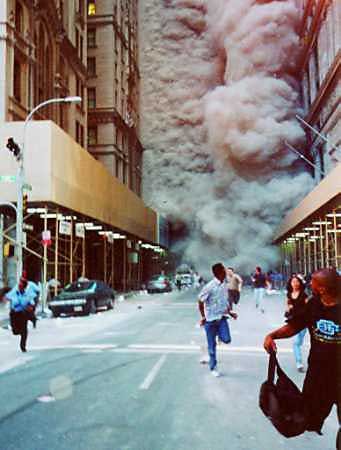 |
| Reuters photo that's haunted me for 10 years |
It's become an annual ritual for Newman and I to touch base on 9/11. (I'll send him a link to this post when it's done.) We usually compare notes on what we're up to in life and how much our kids have grown. It's a moment to remember that, while a certain understanding of the world which we had known certainly did come to an end on Sept. 11, 2001, life itself on planet earth has continued.
Tuesday, September 6, 2011
A journey with biblical proportions
 |
| Couldn't find the Samson picture from this |
Wednesday, May 11, 2011
The inaugural Ethiopia post

All the way back in my first semester at EMU, in the fall of 2008, one of my fellow students at the Center for Justice and Peacebuilding planted a seed in my imagination: Go to Ethiopia and be a teacher for the Church. At first it was a suggestion but by the time my friend, Solomon - who hails from the capital of Addis Ababa, graduated last spring it had become an insistent proclamation. You will go to Ethiopia and be a teacher for the church. In fact, this is how he introduced me to some of his family who had come to Virginia to celebrate his graduation. I'll always remember his mother's response, a matter-of-fact nod, saying "Yes, you will come to Ethiopia."
So last summer when one of my CJP professors taught a course at Meserete Kristos College in Debre Zeit, 40 minutes from Addis, I asked him to check into the possibility of my teaching a class there to fulfill my practicum requirement for my MA program. Within three weeks, at the end of August, my name was on the schedule for the following summer's rainy season semester, teaching "Intro to Conflict Transformation." So just a few weeks from now, my family and I will be on our way to Ethiopia for a month-long adventure in a totally new context for us all. The rest of this post is a bit on the back-story of how this exciting adventure came to be...
Monday, May 2, 2011
Anabaptist party-poopers, sports, shopping, and the military
 |
| Who's laughing now, Evil Bert? |
But I woke this morning remembering what she had told me. We had to pull off a one-car-family maneuver this morning, so I found myself sitting in our car in the parking lot of the city high school where my wife works, waiting for her to come back out to so we could complete the logistical gymnastics with the car. In those intervening thirty minutes, I was curious to hear the news but nervous that it would just make me ill. My reading material was the Bible, so I first made a good faith effort at reading some 1 Samuel, as part of my march through the Old Testament. The chapters I read this morning had to do with Israel desiring a king, the prophet/judge Samuel grumbling about it, God telling him "fine, go ahead with it," and Saul's being anointed and confirmed as Israel's first non-God king. Not surprisingly, Saul goofs up right off the bat.
But my curiosity got the best of me after a few chapters. I closed the Bible and turned on NPR. That lasted for about five minutes and I had to turn it off. A journalist was interviewing a 19 year-old boy at Ground Zero about his "Where you were when bin Laden died" story. (Which is precisely the nature of this very post.) Anyway, this young man, who has lived more than half of his entire life in the post-9/11 shadow of fear cast as the face of Osama bin Laden, was openly emotional, voice wavering and even faltering when chants of "U-S-A! U-S-A!" rose up in the background. People were described as literally swinging from light-posts near Ground Zero, celebrating the apparent victory in the U.S.'s so-called "war on terror." It was too much for me.
Tuesday, February 22, 2011
In the dappled light of my grandfather
 |
| Grandpa Max 1934-2011 |
Still a thousand miles away I continue to ponder my grandpa's life and my place in relation to it. Two weeks ago I wrote a short poem, "In light of the sun", inspired by the image of our cat, Rascal, basking entirely and sublimely in the sun's rays, "between the shifting of shadows." In that "silent singular shine," "there is warmth." And while house cats can largely inhabit that place of purity, radiance, and warmth, humans rarely experience such luxury.
Sunday, February 6, 2011
It's the Journey, not the Presentation
 |
| Art by John Howe |
After having twisted our way through state and county roads in the puzzle-like corners of western Maryland and northern West Virginia, we had recently taken a turn off even those obscure - yet still at least paved - roads. We weren't quite sure when we had lost the trail from our Google Maps directions and were without a GPS device. Our snoozing companions in the back were blissfully oblivious to our situation. I felt level-headed yet was still tired because of the hour and the length of time I'd been driving. Plus I was running on fumes from the coffee that I'd picked up in Ohio, but which had run out a few hours back near Pittsburgh.
Eventually, we found our way back onto a highway whose number we recognized and whose direction was taking us toward home: south and east. So at 3:30 this morning Lora dropped me off at home, where I stumbled in, hastily tossed my things aside, clumsily got undressed, and quickly fell asleep. Our little adventure in West Virginia in the wee hours of the morning served as a great lesson for the trip which had us out on those holler roads in the first place...
Friday, January 21, 2011
A journey to Yoder and beyond
 |
| Don't write this guy off... |
This conversation and others were part of my family's campus visit trip from Iowa to Virginia and the campus of Eastern Mennonite. This trip was the first time I ever had face-to-face encounters with Mennonites, which might be surprising if one is familiar with the history of my tradition, the Church of the Brethren, having one of its historical-theological poles staked in the Anabaptist tradition along with Mennonites. I often refer to Brethren as the "little cousins" to the Mennonites. So read on after the break for a bit of reflection on how I came to know and began to appreciate the theological project of John Howard Yoder...
Monday, January 10, 2011
The Butcher's Apprentice
From
Harrisonburg, VA
 |
| Photo by Andrea Nissolino |
His name is Ike and he's an 81 year-old retired Mennonite pastor. Fifty years ago he came to this little holler at the foot of the mountains lining the western edge of the Shenandoah Valley. Many of the people around us, the locals, have known Ike since they were old enough to remember. He displayed the qualities of a wise master and for a day I was his apprentice. In the course of a day's work butchering pigs, though, he gave me much more than a lesson on the work at hand. Ike's approach to ministering to the community has for years included being the local butcher.
"When you give a sermon, people might remember a phrase or two, maybe a story you told to illustrate the Scripture. But if you come out here," Ike said gesturing at our surroundings with his knife, "people remember you. They trust you."
In this post I'll do some narrative theologizing (more narrating than theologizing) on Ike's long career as pastor/butcher, plus butchering as an analogy to the Christian faith, and finally the experience in general as a somewhat graphic illustration of the gift that is life. So you've been warned: This is not a post for those with weak intestinal fortitude (or PETA people)...
Sunday, January 2, 2011
Top 5 books of 2010
Okay, so 2010 is so two days ago but I'd still like to throw out a list of the five books that rocked my intellectual world last year, which I've come to think of as "the year my brain exploded." As a grad student, my life is of course filled to the breaking point with reading. Seminary-related books will of course dominate this list but I try to be cross-disciplinary and also keep some fiction in my diet to keep my creative brain healthy.
I've talked about a number of the following books and/or their authors, so I'll try not to blab on about them in this post. These are in order of mind-blowingness...
I've talked about a number of the following books and/or their authors, so I'll try not to blab on about them in this post. These are in order of mind-blowingness...
- A Supposedly Fun Thing I'll Never Do Again: Essays and Arguments
by David Foster Wallace (Back Bay, 1998) - I've mentioned Wallace on here a few times this year and his books have been consistently in my reading diet for six months and he still (even just today) makes me think "this guy was a genius." His depth, bredth, and wit is stunning. This book came second in my encounters with Wallace and is easily the most significant I've read ye. I'm thrilled to have a good friend who is an English professor who reads/studies/teaches DFW, so I can look forward to more from Wallace for the foreseeable future.
- To Change the World: The Irony, Tragedy, and Possibility of Christianity in the Late Modern World
by James Davison Hunter (Oxford, 2010) - Hunter's work has informed a number of posts this fall, including a significant engagement with this book in an academic paper. He has helped me see with new clarity the problematic ways in which Christians in America think about and engage the broader culture. Profoundly helpful.
- The Myth of Religious Violence: Secular Ideology and the Roots of Modern Conflict
by William T. Cavanaugh (Oxford, 2009) - I quickly read this book between the spring and summer terms and so didn't get the chance to carefully take notes as I usually do with academic books. This bummed me out numerous times for the rest of the year as I was constantly thinking back to the insights that Cavangaugh offers in this book and wanting to reference them in papers. Luckily, I'm reading this book again this spring for a class and am getting my own copy, so it will be back up front very soon. Here's my short review from earlier this year.
- World Upside Down: Reading Acts in the Graeco-Roman Age
by C. Kavin Rowe (Oxford, 2009) - As I said in my lengthy engagement with this book in an academic paper (same one in which I work with Hunter, linked above), there are very few people to whom I would recommend this book. It's for hardcore theology+biblical studies nerds only, but it introduced me to some compelling philosophical work from Charles Taylor and synthesized that with an equally compelling way to read the book of Acts.
- Tie between: Another City: An Ecclesiological Primer for a Post-Christian World
by Barry A. Harvey and Beyond Sectarianism: Re-Imagining Church and World
by Philip D. Kenneson (both from Trinity Press, 1999) - I read these books roughly at the same time for two different classes in the spring. In many ways they set the stage for all the other books on this list save Wallace's. They are both part of a series called "Christian Mission and Modern Culture" whose short (< 100 pgs) books are excellent primers and still read fresh for being over a decade old. Here's my short review of Harvey's book from back in February.
Sunday, July 11, 2010
So two Dunkers walk into an Episcopal church...
From
Winchester, VA, USA
...and the elder brother says to his student, "Now you see the things our people left behind." Here's something to help set the atmosphere...
Tuesday, June 1, 2010
Lamenting a Season of Service
Back in March, I re-posted a paper which I wrote in 2007 for my senior English project, called "A Season of Service." It was based on experiences amassed from late 2005 through the summer of 2007, especially my volunteer work with the Iowa Dept. of Correctional Services. As I mentioned in that post, those experiences became a catalyst for dramatic life changes in 2008, moving my family from Iowa to Virginia to start graduate studies in seminary and in peacebuilding/conflict transformation. These are my butterfly stories. They're pretty. Like butterflies.
When I saw Howard Zehr speak in Des Moines in March of 2008, he told the crowd that butterfly stories are good. But so are bullfrog stories. The stories that aren't so pretty. The stories that end in sadness or failure or tragedy. Well, I was reminded today that there are some bullfrogs hiding amidst the butterflies of my Season of Service story. Today I received a letter from Jan, the woman who helped me facilitate the writers' workshop program three years ago. While it lifted my heart to hear from her, and she offered some encouraging words, the primary tone of the news she shared with me was sad. It took me a bit to adapt this news to the sun-shiney story I've been walking around telling for the past few years. So read on after the break if you're up for a dose of the dark side of reality...
When I saw Howard Zehr speak in Des Moines in March of 2008, he told the crowd that butterfly stories are good. But so are bullfrog stories. The stories that aren't so pretty. The stories that end in sadness or failure or tragedy. Well, I was reminded today that there are some bullfrogs hiding amidst the butterflies of my Season of Service story. Today I received a letter from Jan, the woman who helped me facilitate the writers' workshop program three years ago. While it lifted my heart to hear from her, and she offered some encouraging words, the primary tone of the news she shared with me was sad. It took me a bit to adapt this news to the sun-shiney story I've been walking around telling for the past few years. So read on after the break if you're up for a dose of the dark side of reality...
Sunday, May 16, 2010
The world from atop the shed
One of the things I thought of while reading through my journal a few weeks ago was to take some of my meager creative writing efforts captured there and stick them somewhere else for posterity. This thought continued to percolate as I read Donald Miller's excellent book on stories and life. So here's one of those pieces, which I wrote one February evening in 2006.
I'll classify it as a word picture and not a story. There is a character (me) but no plot. Just a description of a shed and the backyard of the house where I grew up in tiny little Prairie City, Iowa. My author self speaks to the reader (which also appears to be me) with the benefit of not being time-bound. There is a rooted period of time in the account but it shifts to the past and the future based on the full sweep of my memories as a then-26-year-old. My immediate family and a few of my childhood friends might also register some recognition by reading this. I've made only a few editorial changes from the original, so the style should be fairly true to what I was feeling four years ago, while still working on my BA in English.
So read on after the break for a short piece from the pages of my journal...

I'll classify it as a word picture and not a story. There is a character (me) but no plot. Just a description of a shed and the backyard of the house where I grew up in tiny little Prairie City, Iowa. My author self speaks to the reader (which also appears to be me) with the benefit of not being time-bound. There is a rooted period of time in the account but it shifts to the past and the future based on the full sweep of my memories as a then-26-year-old. My immediate family and a few of my childhood friends might also register some recognition by reading this. I've made only a few editorial changes from the original, so the style should be fairly true to what I was feeling four years ago, while still working on my BA in English.
So read on after the break for a short piece from the pages of my journal...

Monday, April 26, 2010
The poetics of restorative theology
As a gift for my high school graduation in 1997, someone gave me a journal. The first use of this journal was a guest list for my graduation party. I've gone over that list a number of times in the intervening thirteen years and have been surprised again and again at the people who showed up at my parents' old house in Prairie City, Iowa. I'm still writing in this same journal these days, but I'm starting to run out of pages, and it won't be long until it's completely filled up and I'll move on to another.
The other night, I couldn't sleep, so I did something with this journal that I had never done before. I read it cover to cover. Thirteen years of my life captured in periodic snapshots, covered in about two hours. The highs and lows of college, a career in IT/corporate America, being in a family, life in the church, going back to college, and finally moving to Virginia into our current phase of life. Something struck me as I waded through all this reflective writing, and that was a near-constant expressed desire to be doing something creative or artistic in some way. Early on it was focused on my band/music project, Honnold, which started as a band in high school and has since morphed into a website that joins the music we've produced with a small virtual community. As I transitioned back into college in my mid-20's, I was studying English literature and taking a writing class or two, and my journal entries became attempts at creative writing in either fiction or non-fiction, and sometimes poetry. I can trace this artistic impulse all the way back into my childhood, so it's clear to me that this is a life-long dimension to how I come at life. So read on after the break for a few more thoughts on how the arts inform my life's work/project/ministry/whatever, that I've here called "restorative theology..."
The other night, I couldn't sleep, so I did something with this journal that I had never done before. I read it cover to cover. Thirteen years of my life captured in periodic snapshots, covered in about two hours. The highs and lows of college, a career in IT/corporate America, being in a family, life in the church, going back to college, and finally moving to Virginia into our current phase of life. Something struck me as I waded through all this reflective writing, and that was a near-constant expressed desire to be doing something creative or artistic in some way. Early on it was focused on my band/music project, Honnold, which started as a band in high school and has since morphed into a website that joins the music we've produced with a small virtual community. As I transitioned back into college in my mid-20's, I was studying English literature and taking a writing class or two, and my journal entries became attempts at creative writing in either fiction or non-fiction, and sometimes poetry. I can trace this artistic impulse all the way back into my childhood, so it's clear to me that this is a life-long dimension to how I come at life. So read on after the break for a few more thoughts on how the arts inform my life's work/project/ministry/whatever, that I've here called "restorative theology..."
Subscribe to:
Posts (Atom)