Showing posts with label nationalism. Show all posts

Tuesday, July 2, 2013

Technology and the impossibility of a "just" war

"War is hell"; Sherman torches Atlanta; painting by Mort Künstler
In his book, God and Gadgets: Following Jesus in a Technological Age, Brad Kallenberg argues that we live in an age where we (Americans) have become "Bewitched by Technopoly" (the title of his first chapter). This technopoly, or technological monopoly, on our social imagination can be seen gaining its early footholds in 19th century American history.

As a nation born out of revolutionary violence and struggling to assert itself as a sovereign nation on the world stage, military leadership of this young nation saw that things were not well with the U.S. military. Kallenberg cites military brass of the day "(p)ointing to insufficient supplies, tactical errors, and faulty arms" following the War of 1812, and their desire "to draw up a system of regulations for the uniformity of manufacturers of all arms ordnance, ordnance stores, implements, and apparatus" (quoting Merritt Roe Smith).


Wednesday, April 24, 2013

The War on Drugs and the birth of a police state

Boston SWAT, April 16, 2013
(Photo by Jozef Stazka/Flickr)
The terrible events in Boston last week were many things. One thing that struck me was the massive show of power on the part of police departments. Shutting down an entire city, conducting a sweeping manhunt, etc. This is no small task. In the case of events like last week, this is generally seen as a very good thing, even if it was somewhat surprising and shocking to many, least of which the residents affected by the whole ordeal.

For a nation that's been at war for over a decade, perhaps seeing armored vehicles, assault weapons, and camouflaged police officers isn't a big shock. But it does give some pause.

One thing to ask might be: How did police forces end up looking like paramilitary units?

Michelle Alexander, in her book The New Jim Crow, offers some clues. The "War on Drugs" - that is by now seen as a colossal failure - began its life as a political utterance in the late 1960s, made a rhetorical device over the next decade, and then in the 1980s was institutionalized by the Reagan administration and foisted onto all levels of law enforcement, from federal all the way down to local/municipal departments. (It also had a racial dimension, which is key to her argument, but that's not this topic.)


Monday, April 15, 2013

Hunger games and martyrdom at Gitmo

"How long, O LORD?" -Ps 13
(Illus. by Matt Rota/NTY)
I want to make the claim here that there is a kind of  martyrdom happening at the US military prison facility at Guantánamo Bay, Cuba.

First, read this blood-chilling first-hand account of the hunger strikes and the treatment being carried out on the bodies/souls of imprisoned human beings: Hunger Striking at Gitmo...
ONE man here weighs just 77 pounds. Another, 98. Last thing I knew, I weighed 132, but that was a month ago. I’ve been on a hunger strike since Feb. 10 and have lost well over 30 pounds. I will not eat until they restore my dignity.
The man offering the account is Samir Naji al Hasan Moqbel, a Yemeni Muslim who has been detained without charge or trail for over ten years. He and others prisoners have been stripped of every last shred of human dignity they have, including their ability to deprive themselves of sustenance to protest their inhuman treatment. So in their attempts at meager protest and the response by their captors - forced feedings - there is a sick "hunger game" playing out.

It is martyrdom because these protestors are bearing witness ("martyr"="witness") to the moral depravity of the entire system that's got them captive, Gitmo and the legal (extra-legal) gyrations that were concocted in order to bring its sick existence into being over 10 years ago.

Friday, December 21, 2012

Postscript to media catastrophism: Nationalism

Playing in my thinking about the media but not making it into my last post is this thesis: The U.S. media is inherently nationalistic. As such, the bounds of "we" and "they" split along the borders of this nation-state. When tragedies within these social-imaginary borders occur, it is "us" that are collectively shocked, angered, and grieved. But what of tragedies outside these borders?

Amongst American journalists, I find Glenn Greenwald to be the most fearlessly critical of U.S. foreign policy, particularly the drone warfare program that has been greatly expanded by the Obama administration. His latest piece in The Guardian is powerful...

Newtown kids v Yemenis and Pakistanis: what explains the disparate reactions?

It is powerful in not only its critique, but also its sensitivity. He rightly names the real differences between the tragedies of Newtown and the drone war. These are qualitatively different phenomenon, but our national responses (or non-responses) to them are illustrative. He particularly calls out the dehumanization of predominantly Muslim people throughout the global war on terror of the past decade, and how the dehumanization that war necessarily calls for has sedimented into the public psyche. We can now call children killed in foreign countries by U.S. ordinance "bug splat" and no one bats an eye.

Wednesday, October 31, 2012

Voting: Ritual or Responsibility? - A response

[Note: The following text was presented at an on-campus event at EMU today, "Voting: Ritual or Responsibility?" I was one of three main presenters, along with EMU professors, Ted Grimsrud and Jayne Seminare Docherty. Ted and I have had significant conversations over the past weeks, online and at the pub, and Jayne is one of my former professors at the Center for Justice & Peacebuilding/CJP. The discussion was facilitated by Jonathan Swartz and Matthew Bucher, both dual-degree students like I was, in the Seminary and CJP. Thanks to everyone involved at the event, and I welcome more conversation below in the comments! - Also, check out Ted's three posts on this topic, where I also have some comments posted.]

In a 1977 article in Sojourner’s, John Howard Yoder had this to say about the then-current context: “American political culture, a comparatively solid crust of common language and rules of thumb, floats on a moving magma of unresolved debate between two contradictory views of what the state is about.” In this article, entitled “The National Ritual: Biblical realism and the elections,” Yoder goes on to argue that we shouldn’t get ourselves too worked up about this system, or take it too seriously. But nonetheless this weak system is one that we can and perhaps should participate in.  I quote:
[Voting] is one way, one of the weaker and vaguer ways, to speak truth to power. We may do well to support this channel with our low-key participation, since a regime where it functions is a lesser evil…than one where it does not, but our discharge of this civil duty will be more morally serious if we take it less seriously.
This position of Yoder’s I take to be the basic position taken by Ted in his arguments, both here and on his blog. And I’m sympathetic to both, and don’t necessarily disagree. But I want to sound a few cautions.

I’ll start with a quote by Yoder’s one-time colleague at Notre Dame, Alasdair MacIntyre, who made these comments in the run-up to the 2004 presidential election. I quote:
When offered a choice between two politically intolerable alternatives, it is important to choose neither. And when that choice is presented in rival arguments and debates that exclude from public consideration any other set of possibilities, it becomes a duty to withdraw from those arguments and debates, so as to resist the imposition of this false choice by those who have arrogated to themselves the power of framing the alternatives.

Tuesday, September 25, 2012

The iPhone as cultural pornography

One fruit to rule them all?
The iPhone 5 release event in NYC; photo by thomasebunton/Flickr
Sometimes it couldn't be more blatant. My favorite nerd site, Ars Technica, ran two stories yesterday separated by a mere 17 minutes. Here they are in the order I saw them in my Twitter feed:
  1. iPhone 5 sales top 5 million during launch weekend (9/24, 9:17am)
  2. Foxconn worker riot closes factory (9/24, 9:00 am)
Line from the first story:
"Demand for iPhone 5 has been incredible and we are working hard to get an iPhone 5 into the hands of every customer who wants one as quickly as possible," Apple CEO Tim Cook said in a statement.
Awesome, how are they going to do that? Well...the second story has some clues:
TUAW speculates that the riots (at Foxconn) were in no small part caused by the recent long iPhone 5 production ramp-up; Engadget links to a (non-English) report discussing "practically compulsory" overtime related to iPhone 5 production.

Monday, July 23, 2012

Creationist debates over the Internet

From Harrisonburg, VA, USA
And on the sixth day, Al Gore gave us...
(Photo by Lawrence OP via Flickr.)
It should be obvious to anyone who knows me: I owe a great deal to the existence of the Internet. My entire professional life would not have been possible without it, including my new job at Eastern Mennonite University, which entails convincing graduate programs to invest more energy and imagination in recent innovations in web-based tools for advancing online education at EMU. And here I am saying this on a blog.

Yet there is an aspect of the Internet that has taken on new significance after my theological education at EMU, steeped as it is in the pacifist Anabaptist tradition: The Internet's inextricable link to the nation-state.

It's impossible to avoid the military (and therefore the nation-state) in any account of modern, post-WWII digital technology, including the Internet. The military has been, and continues to be, a huge source of funding for technological innovations. (Entrepreneurs take note: I hear drones are a big growth sector!)

Then there are the debates about who or what is primarily responsible for the creation of the Internet, signaled in this piece from Ars Technica, my go-to nerd website: WSJ mangles history to argue government didn't launch the Internet.

Wednesday, May 23, 2012

Ecclesia and Occupy: Through a glass darkly

From 80 Court Square, Harrisonburg, VA 22802, USA
Paulette Moore speaks about Occupy Harrisonburg,
at the #Occupy Empire conference last month.
Arun Gupta has a great analysis of the Occupy movement's history (albeit brief) and current state of affairs, posted at the Al Jazeera English site: What happened to the Occupy Movement?

Especially powerful in my reading is his section, "Colonised by consumption," where he argues that the public commons has been eroded or "colonised over decades by full-spectrum consumption - shopping, eating, drinking, entertainment and paid spectacle." Occupy embodied a recreation of a public commons, enacting something different in the creation "mini-societies" within places like Zuccotti Park in Manhattan's financial district. Gupta states that:
The scene of hundreds of people exchanging food, art, music, knowledge, politics, healthcare, shelter, anger, ideas, skills and love was unlike anything else in our consumer societies - because not one exchange was lubricated by money (of course the goods were paid for at some point).
This "alternative society" aspect of Occupy is what keeps my theological interest engaged in the movement. It is in some ways a vision, as through a glass darkly, akin to what the church should look like in public: a distinct assembly (ecclesia, what we translate from Greek into "church") that lives its collective public life amidst other bodies politic.


Monday, April 9, 2012

Easter at Arlington

From Arlington National Cemetery, McNair Rd, Arlington, VA 22211, USA
"He has risen." Easter sunrise at the Tomb of the Unknown Soldier.
First, a confession: Holy Week did not feel very holy last week, at least in terms of how I engaged it. The demands of the final three weeks of grad school are starting to compress, and my participation in local worshiping bodies - seminary and our congregation - has been strained. No Wednesday evening lenten worship with folks at Park View Mennonite, no Love Feast with a Brethren congregation on Maundy Thursday, and no Tenebrae service. As someone fairly convinced by the formative influence of communal worship upon our body, personal and collective, this absenteeism from Holy Week worship practices really ate at me. Then my wife told me what we were going to do for Easter, when we happened to be in Washington, D.C., with her sister's family.

"We're going to the Easter sunrise service at Arlington National Cemetery."

For a Christian pacifist in the Anabaptist tradition, this is no trivial thing. But despite my initial shock at the idea, I quickly said "Ok," thinking to myself, "this will be interesting." For one thing, we were with my sister-in-law's family, and her husband is career military. Indeed, there is a strong military tradition in my wife's family, which is completely absent from my own. So in spite of my deepening Christoligcal pacifist convictions, I have a deep commitment to brothers and sisters in Christ who don't share these, especially Americans and those in my own family.

Much like I can't go a movie theater just to see a movie, I can't do something like go to a cemetery for fallen U.S. soldiers just to worship on Easter. There's no "just." There's too much other stuff going on all around, all of which has just as storied a nature as what's being celebrated on Easter. My wife will be the first to tell you that I think too much, and this is a prime example. So take a deep breath for this looong and somewhat rambling reflection on an Easter morning spent at Arlington...


Monday, January 23, 2012

Encircling a falling hero

From Eastern Mennonite University, 1200 Park Rd, Harrisonburg, VA 22802, USA
Emperor Haile Selassie I
Over the Christmas break I was able to read a book which was neither theological nor philosophical, which needs to happen far more often than it does. The Emperor by Ryszard Kapuscinski details the final years of Ethiopa's last monarch, Haile Selassie, who fell to a communist military junta, the Derg, in 1974, and who died in captivity a year later. The book originally got on my list since it was acknowledged as a key source for Abraham Verghese's breathtaking novel, Cutting for Stone, which I mostly read on the plane ride home from Ethiopia and wrote about last summer.

The author, Kapuscinski, was a Polish investigative journalist who was able to spend time in Ethiopia before and after the coup, conducting interviews with servants and counselors to the august emperor. Much of the story comes directly from interview transcripts themselves, so the subjects speak most and other than "silent" editorial control, Kapuscinski interjects his voice only periodically.

The stories are at once gripping, mundane, and pathetic. What struck me most about this book was the deep ambivalence on the part of the subjects interviewed. These were for the most part people who served their emperor proudly and took seriously the royal mythology that linked the long line of Ethiopian monarchs directly to the biblical Israelite king, Solomon. The ambivalence arises when these loyal servants and subjects reflect on the anachronistic and horrendously corrupt and inefficient monarchial government, struggling mightily for development and modernization in the rapidly changing world leading up to the last quarter of the twentieth century. These subjects were loyal but they were not delusional.

Friday, December 2, 2011

The creation myth of human rights

From Harrisonburg, VA
For as much as I gripe about nationalism in the U.S., I want to be fair in representing the fact that the myth of "nation as savior" is not unique to my own nation, as this video about universal human rights makes plain. Especially of interest to my argument is minutes 2 through 5...

Monday, October 3, 2011

The "Jewish State" revisited

Sari Nusseibeh, professor of philosophy at Al-Quds University in Jerusalem, has a fascinating op-ed piece up at Al Jazeera...


Nusseibeh makes a number of points which resonate with the theopolitical literature I've been absorbing over the past year or more, found mainly in the work of William T. Cavanaugh.

The article highlights the complex nature of ancient traditions in late Modernity. Cavanaugh has convincingly shown that the characterizations of "religious" and "secular" are constructs of the modern nation-state, the ascendant and still-prevalent form of organizing people and power within territorial boundaries. Nusseibeh is right to point out that calls for a "Jewish state" are incoherent based on present political arrangements, not to mention the slippery nature of "Jewishness" in our secular age.

Thursday, September 22, 2011

Chronicles of the state's monopoly on legitimate violence (cont.)

The view from my classroom window; Debre Zeit, Ethiopia
The picture at the right is what I saw every weekday for three weeks, as I taught "Intro to Conflict Transformation" at Meserete Kristos College in Debre Zeit, Ethiopia. One prominent feature of this city is its being host to an Ethiopian air force base, on the opposite side of town from where we were at the college. So oftentimes during class, we would see and hear (and feel) the low-flying fighter jets passing over the college on their way to the landing strip a few miles away.

This is the memory that immediately came to mind when I saw the following story on Global Post...
US building drone bases in East Africa
Drone News: The Obama administration is setting up more drone bases in Ethiopia and Seychelles to target Al Qaeda affiliates in East Africa and the Horn of Africa, particularly Somalia.
The emergence of unmanned drones as weapons of war first became deeply troubling to me a few years ago when I saw the PBS Frontline special, Digital Nation, which near the end interviews drone pilots with cozy middle class lives in the US, who go to work in an office and operate computers just like so many other middle class Americans, but they just happened to be flying remote controlled planes halfway around the world, dropping real bombs, killing real people (which have a propensity to kill civilians). I still shudder thinking of that segment. So that the use of drones is spreading to other areas of the globe in the name of the forever war called, "The War on Terror," is an unsettling development.

Monday, September 5, 2011

Chug a beer for the Solider-Priests of Freedom!

From Eastern Mennonite University, 1200 Park Rd, Harrisonburg, VA 22802, USA
"High life" defined as American consumerism (click image)
Literary critic, William Deresiewicz, offers a biting commentary on America's post-9/11 "cult of the uniform" in a recent New York Times op-ed piece:

An Empty Regard
(via Fors Clavigera)

The author's main contention is that we as a nation have set up this cult of the uniform as a way to immunize the military from critique. This cult is attended to by the secular liturgies entailed by the hero worship of soldiers, who serve as priests of our freedom. The cult is constructed and practiced in such a way as to make criticizing the military analogous to criticizing those who serve in the military. But as Deresiewicz contends...
(W)ho our service members are and the work their images do in our public psyche, our public discourse, and our public policy are not the same. Pieties are ways to settle arguments before they begin. We need to question them, to see what they’re hiding. (Emphasis mine.)
I commend this piece for a host of reasons which I'll explore below. Just briefly, though, this piece is excellent because it voices many of the reasons why I happily and intentionally maintain relationships with American soldiers within my networks of friends of family, while still remaining an ardent Christian pacifist. Criticizing the military-industrial complex and the work it asks of its members by no means diminishes my care for those members, who are real human beings with real challenges and needs.

[Oct '11 update: The Mennonite Weekly Review has since picked up this post in edited form: Hero worship of U.S. soldiers. As usual, thanks to Sheldon C. Good for his editorial hand!]

Tuesday, August 30, 2011

So John Howard Yoder, Gene Sharp, and Bashar al-Assad walk into a bar...

From Harrisonburg, VA
...and they all order "Peace."
(Or the boring title: "Christological-theopolitical pacifism and strategic nonviolence in conversation.")
Syrian protests in Washington D.C.
(Photo by Elvert Barnes via Flickr)
On the heels of my intellectual-existential catharsis last week about theology and peacebuilding, I had a conversation with one of my fellow graduate students at the Center for Justice & Peacebuilding, Mohammed, who is Syrian. He's been here in the States since last year and has watched with horror and heartbreak over these recent weeks at the events unfolding in his home country, as Bashar al-Assad's regime violently cracks down on protesters. Mohammed referred to this crack-down as "the mowing machine," a grimly apropos metaphor for the ruthless and bloody attacks on protesters which have left a trail of dead. (To which the protesters have not responded with organized violence, unlike rebels in Libya.)

When Mohammed and I spoke, I was in the midst of reading this article: The Syrian revolution as Gene Sharp sees it (GlobalPost), to which I promptly sent him a link, especially after he spoke so glowingly of the scholar and advocate of nonviolent resistance. Sharp's name also came up earlier this year when our peacebuilding program was discussing the revolution in Egypt, which one of our alumni saw up close and personal. As I read through Sharp's reflections on the situation in Syria, it got me thinking about the connections and departures between strategic nonviolence and Christian pacifism.

Tuesday, August 16, 2011

Better together: Hauerwas and Taylor on American Secularity

From Eastern Mennonite University, 1200 Park Rd, Harrisonburg, VA 22802, USA
The statesman and the raconteur;
Charles Taylor & Stanley Hauerwas
Two pieces that popped up for me in the past day seem to be good companions for each other and stimulated my thinking along the topics of nationalism and secularity. That they come from two men who've dramatically influenced my thinking in the past year was a plus.

Monday, May 2, 2011

Anabaptist party-poopers, sports, shopping, and the military

From Eastern Mennonite University, 1200 Park Rd, Harrisonburg, VA 22802, USA
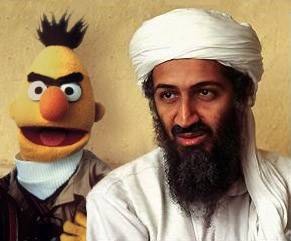
Who's laughing now, Evil Bert?
Last night when the news broke that Osama bin Laden had been killed, I was happily asleep. My wife was upstairs working late and so heard the news. When she came down to get ready for bed, she turned the lights on, nudged me, and asked, "Are you going to get up and watch the president's speech?" I groaned quizzically. "Bin Laden's dead," she answered. I pondered this in my half-consciousness. "How do they know?" I groaned, probably incoherently, rolling away from the light and falling back asleep before I could hear her answer.

But I woke this morning remembering what she had told me. We had to pull off a one-car-family maneuver this morning, so I found myself sitting in our car in the parking lot of the city high school where my wife works, waiting for her to come back out to so we could complete the logistical gymnastics with the car. In those intervening thirty minutes, I was curious to hear the news but nervous that it would just make me ill. My reading material was the Bible, so I first made a good faith effort at reading some 1 Samuel, as part of my march through the Old Testament. The chapters I read this morning had to do with Israel desiring a king, the prophet/judge Samuel grumbling about it, God telling him "fine, go ahead with it," and Saul's being anointed and confirmed as Israel's first non-God king. Not surprisingly, Saul goofs up right off the bat.

But my curiosity got the best of me after a few chapters. I closed the Bible and turned on NPR. That lasted for about five minutes and I had to turn it off. A journalist was interviewing a 19 year-old boy at Ground Zero about his "Where you were when bin Laden died" story. (Which is precisely the nature of this very post.) Anyway, this young man, who has lived more than half of his entire life in the post-9/11 shadow of fear cast as the face of Osama bin Laden, was openly emotional, voice wavering and even faltering when chants of "U-S-A! U-S-A!" rose up in the background. People were described as literally swinging from light-posts near Ground Zero, celebrating the apparent victory in the U.S.'s so-called "war on terror." It was too much for me.


Monday, April 25, 2011

Easter after Communism

From Eastern Mennonite University, 1200 Park Rd, Harrisonburg, VA 22802, USA
Pirin Mountains, viewed from Bansko
(Photo by Daria's friend, Vili)
My friend Daria grew up in the town of Bansko, situated in the shadow of the Pirin Mountains in southwestern Bulgaria. Another shadow cast over the whole country was that of communism, effective from 1944 to '89. Under that shadow in her youth, Daria describes the Orthodox church in her hometown as only being frequented by grandmothers and the priest. Everyone else had too much to lose under the fear of being monitored and reported, thus losing jobs and livelihoods.

Daria recalls being drawn by a spiritual hunger for the biblical narrative at a young age, and the only place in which it could be experienced in these conditions was secretly in the home. So her grandmother would read her stories from an old, dusty family Bible. Even at a young age and under such tight restrictions, Daria had a quiet reputation for knowing stories from the Bible. For instance, her eye doctor would ask her to recite them for him when she spent a few weeks in the nearby town where he practiced. The doctor had no other way to hear these stories than from this five year old girl.

Sunday, March 6, 2011

Military porn, military infidelity

From Eastern Mennonite University, 1200 Park Rd, Harrisonburg, VA 22802, USA
Scrolling through my Facebook news feed tonight produced two links that worked together to create quite a series of knots in my Christian pacifist guts...

First, a handful of my family members and friends, all of whom I respect and love, serve in various branches of the United States military. Most, if not all of them would call themselves Christian. One of these men, with whom I've discussed Bonhoeffer and Christian pacifism, posted on his Facebook wall the video which follows the break. I caution against watching the video, which I would classify as "military porn." I reluctantly did so and became very sad at first and then furious at the end, when I heard the quote: "We've all been taught 'Thou shall not kill.' Now hear this: Fuck that shit." Wow. At least they're honest.

Sunday, November 28, 2010

Giving thanks for what, exactly?

From Eastern Mennonite University, 1200 Park Rd, Harrisonburg, VA 22802, USA
Turkey fried! (by Lily Gicker)
James K.A. Smith put a great post up over the Thanksgiving weekend: The Secularization of Thanksgiving and the Sacralization of the Military. It's a quick read but he does heavy lifting in that short space. His analogy of the American soldier as the "warrior-priest" protecting our materialistic freedom has some resonance with me, especially if filtered through the lens of country music.

In the song "Chicken Fried" by the Zac Brown Band you'll find the following lyrics toward the end:
I thank God for my life
And for the stars and stripes
May freedom forever fly
Let it ring.
Salute the ones who died
The ones that give their lives
So we don't have to sacrifice
All the things we love
Like our chicken fried (the chorus goes on to list: cold beer, blue jeans, etc.)
Let me be frank: I'm no fan of contemporary country music and this song is probably the most shining example of why that is. My bellyaching has less to do with my being a pacifist vis-a-vis the song's referencing of military service than it does with this song being crassly materialistic and idolatrous. Heaven forbid that we'd have to stop eating fried chicken and drinking beer.

I don't want to sound like a complete jerk about this so, yes, over Thanksgiving I enjoyed many of the same things that Zac Brown holds so dear in the song: Poultry, football, and even cold beer (on a Friday night, no less). Heck, I was even wearing a pair of jeans that fit just right! That's all nice stuff that I don't want to take for granted, but to signal an unwillingness to sacrifice those things? Indeed, the logic of the song implies that God doesn't want us to sacrifice our creature comforts, which is far outside the fence of orthodox Christian teaching. Jesus' call to those who would be his disciples is to "deny yourselves, take up your crosses, and follow me" (paraphrase of Mark 8:34). Also note the use of the word "love" in the lyrics. Biblical love looks much different than the song's list of great American leisure activities and culinary delights.

I realize I'm putting a lot of freight on a pop culture artifact, but it's worth questioning the pop theology that pervades public life and always has some formative influence on our faith and discipleship, whether we know it or not (more often not).